

Moulded and made with second chances.
Soil mixed with minimal stabiliser, poured into formwork, raw texture left as finish.
The Debris Wall is made of waste quarry stones, set in mortar as a feature surface throughout the house.
Antique and second-hand pieces sourced from Rajasthan, restored rather than replaced.
Harvested invasive lantana turned from an ecological problem into a structural and aesthetic solution.
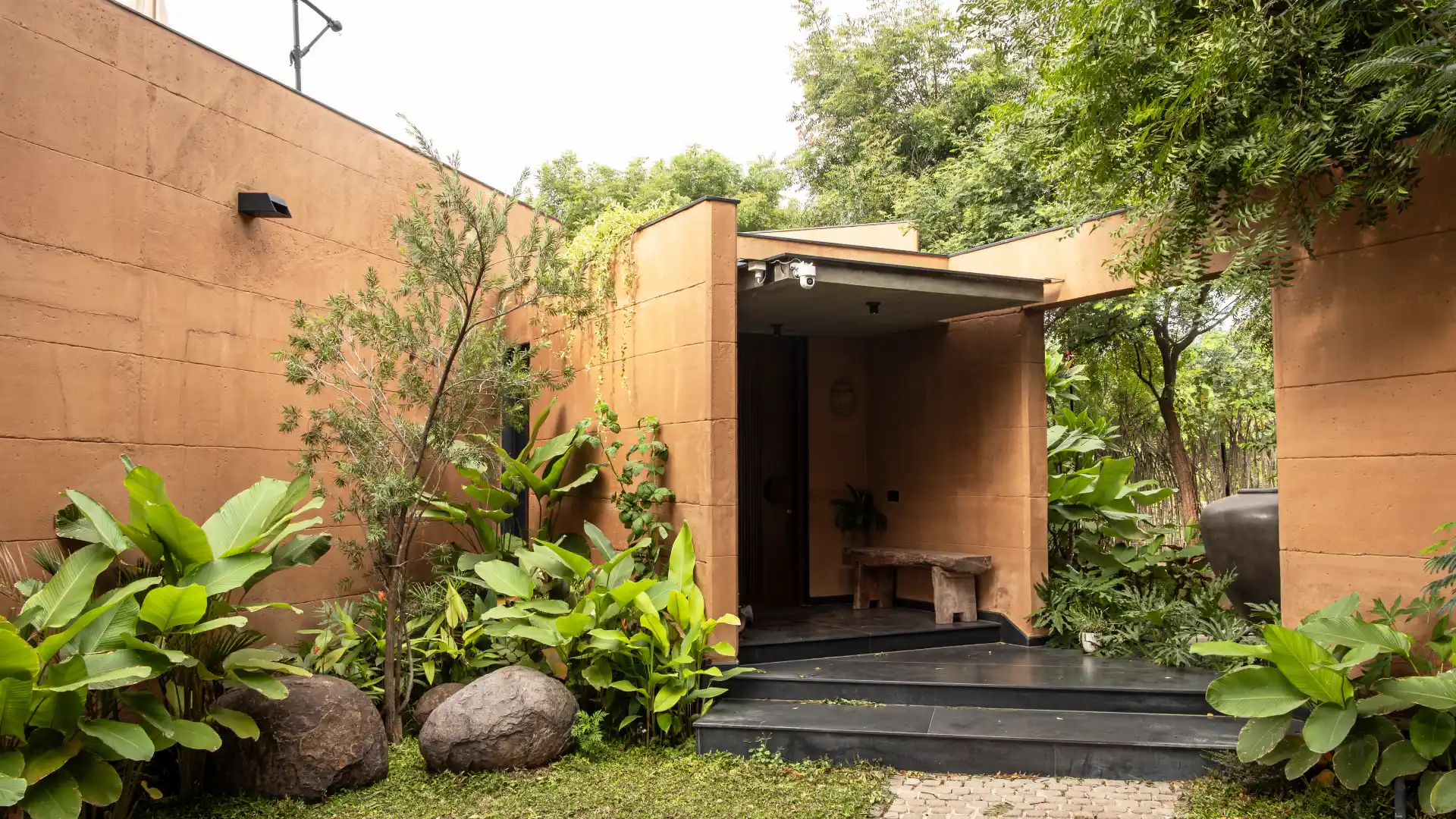
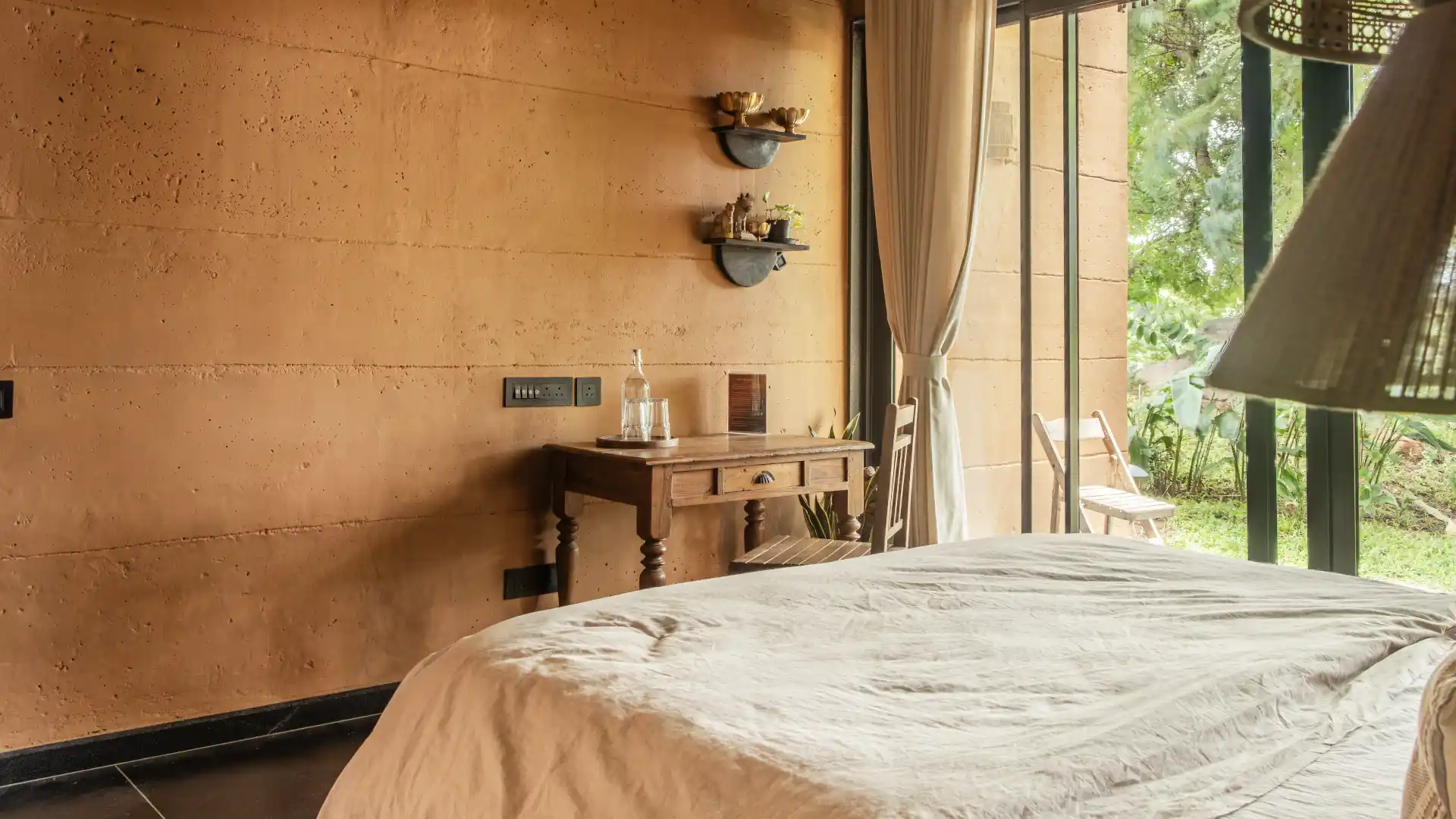
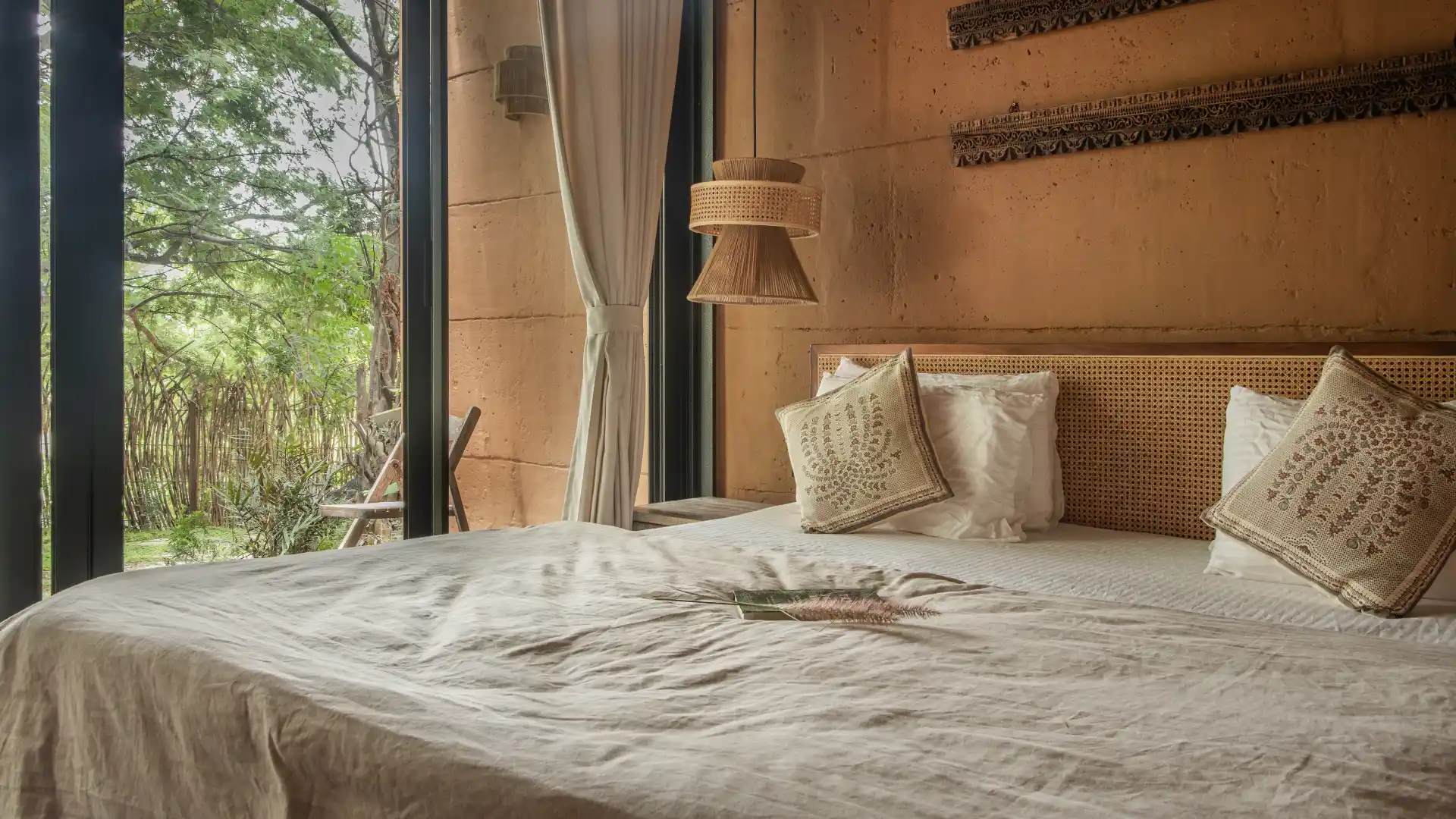
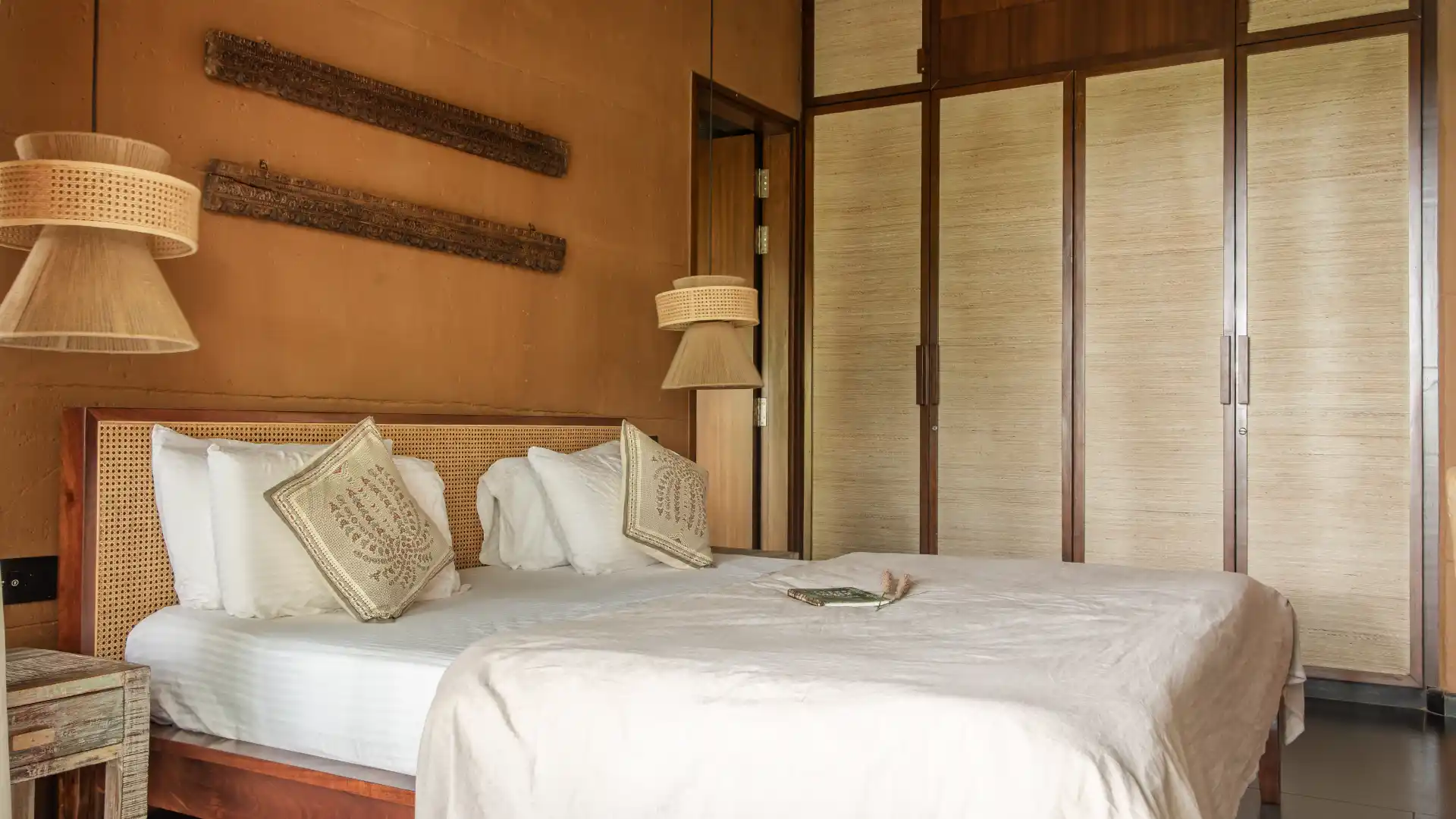
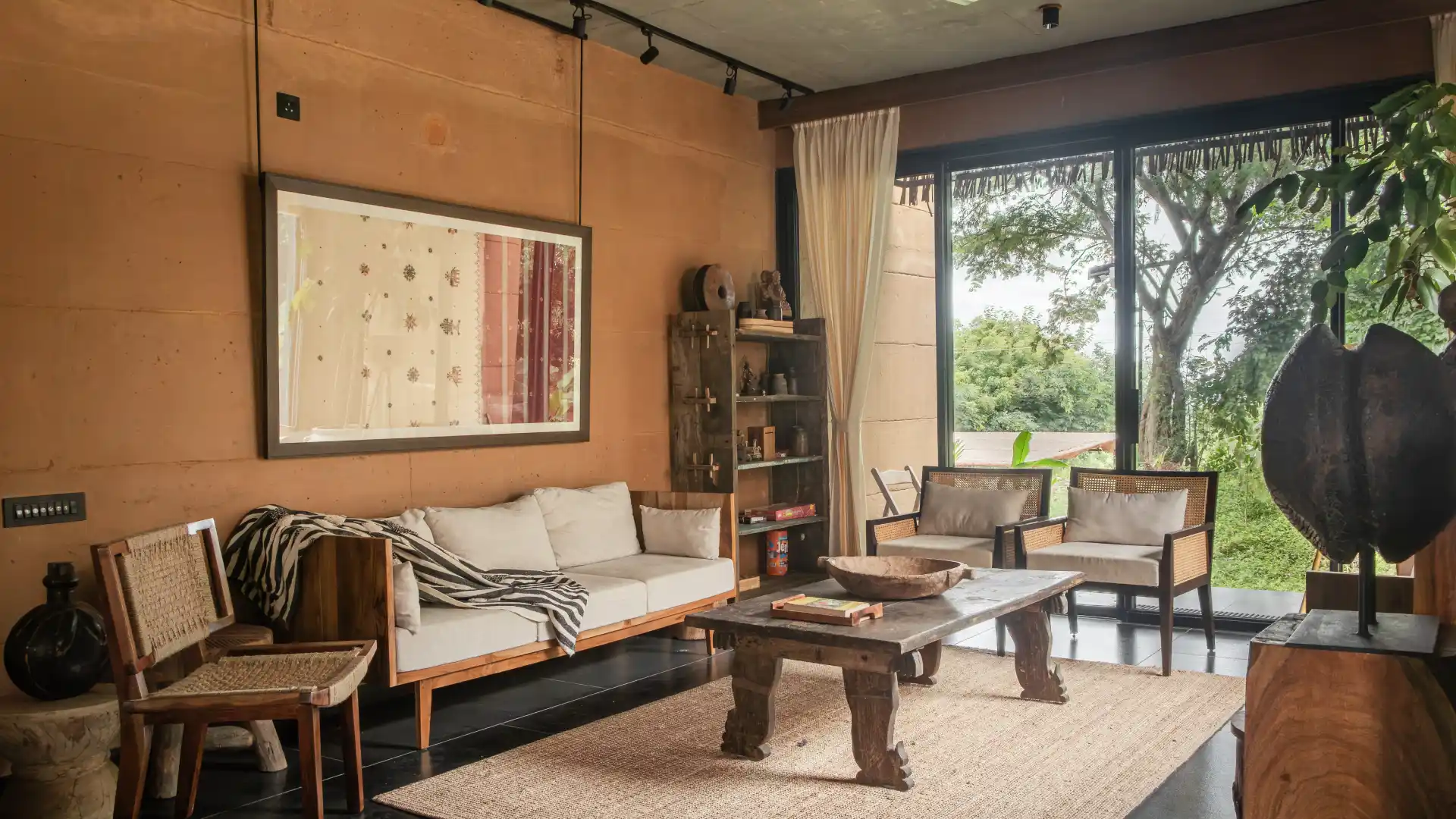
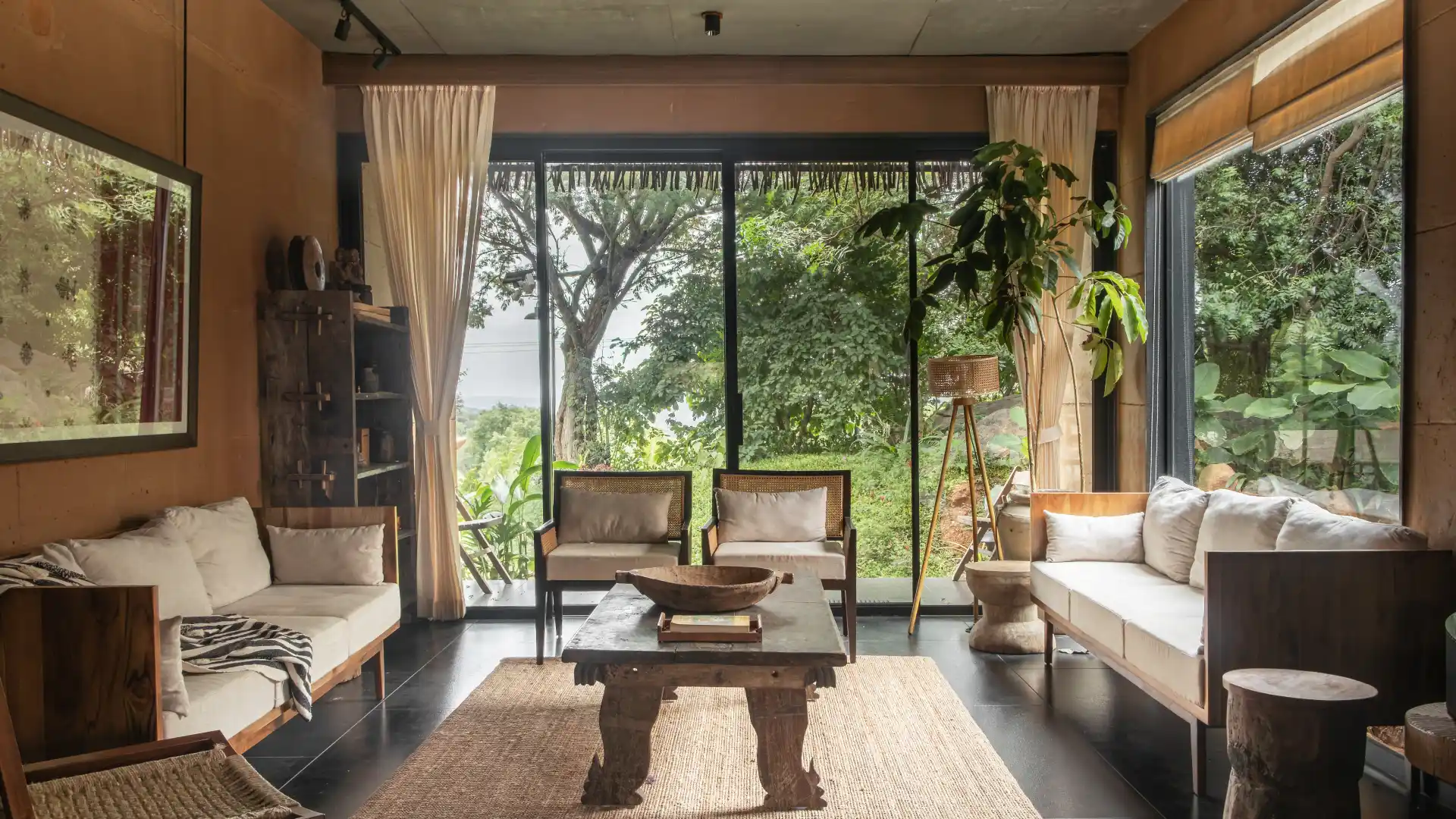
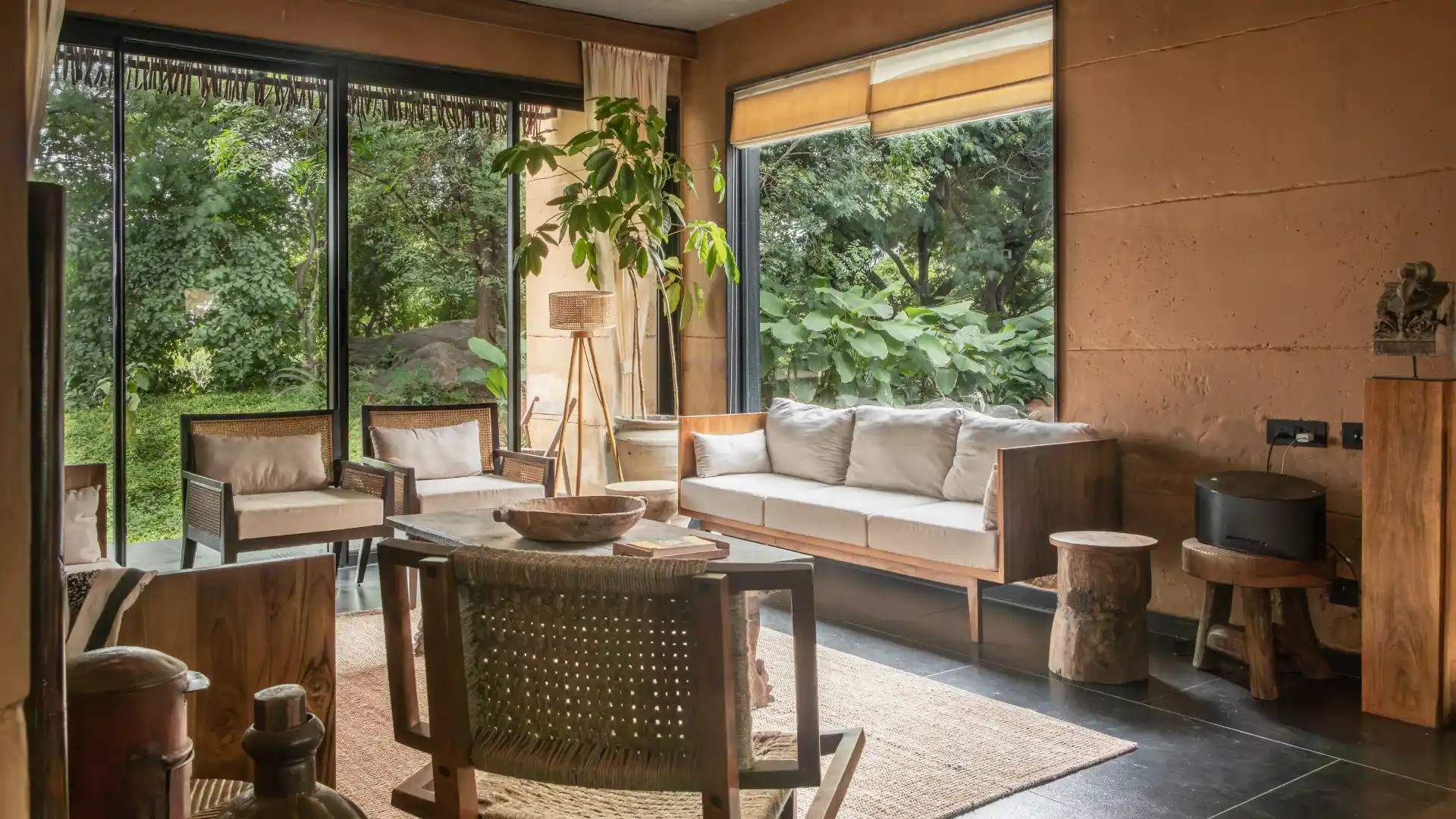
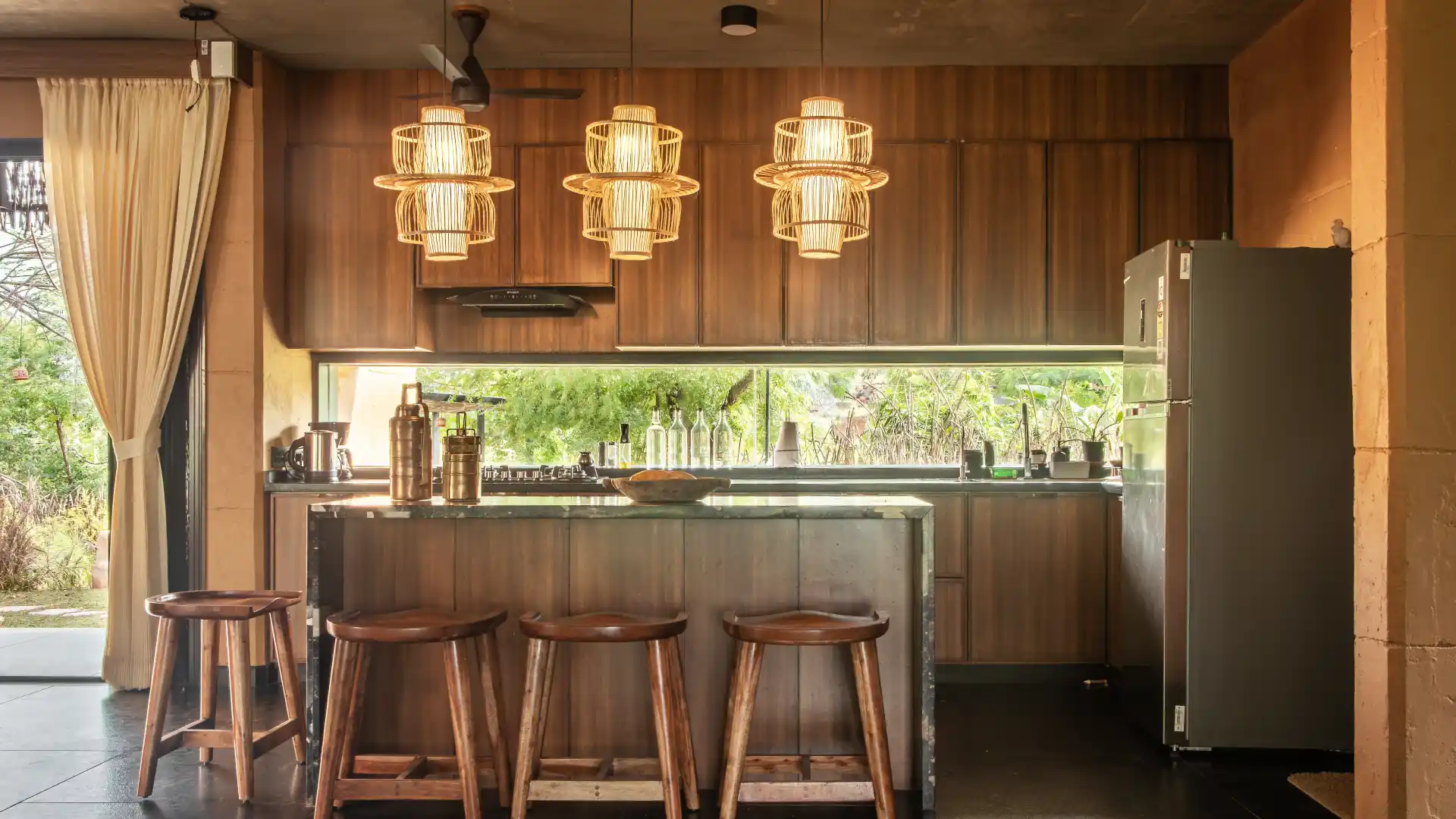
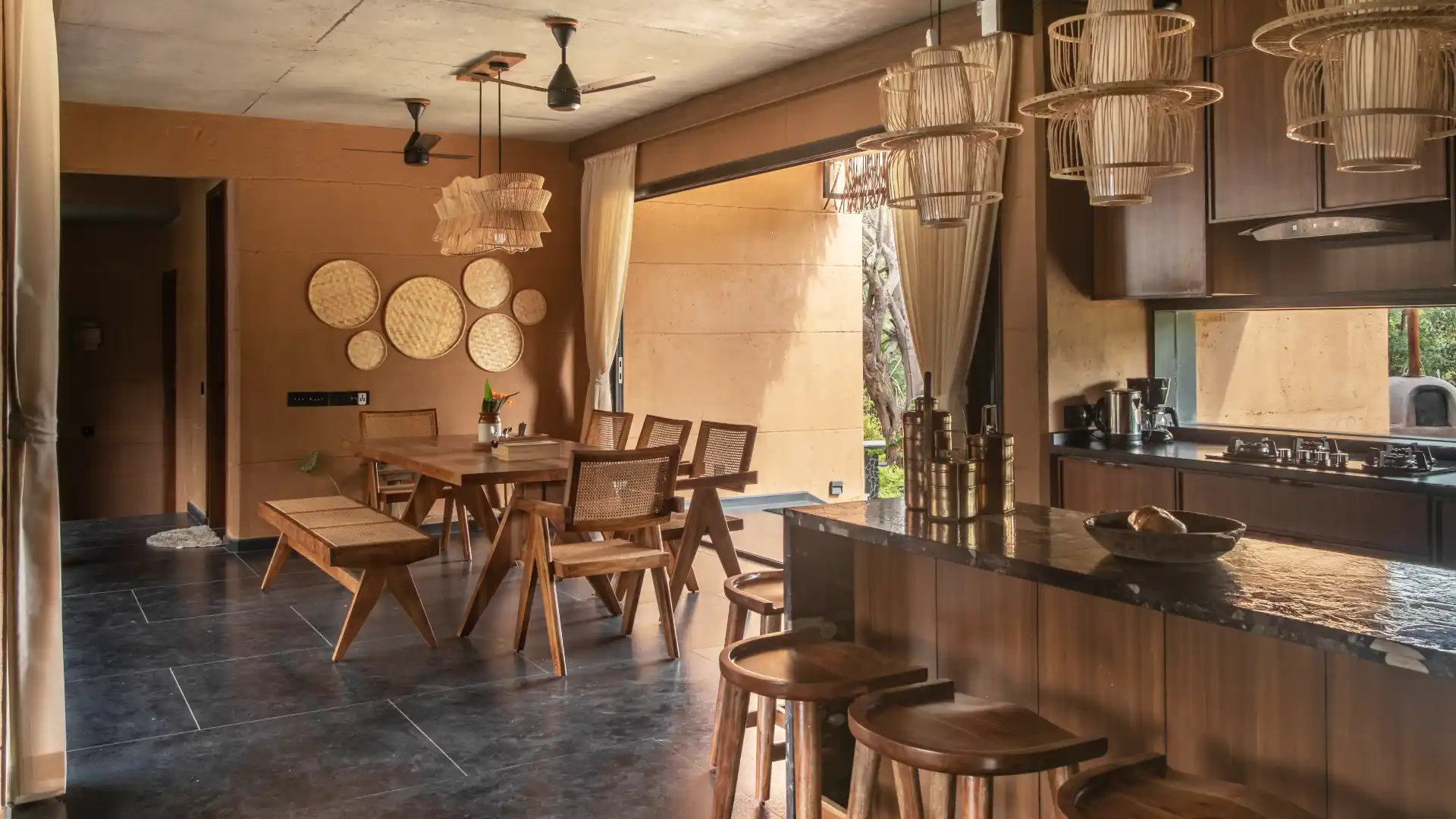
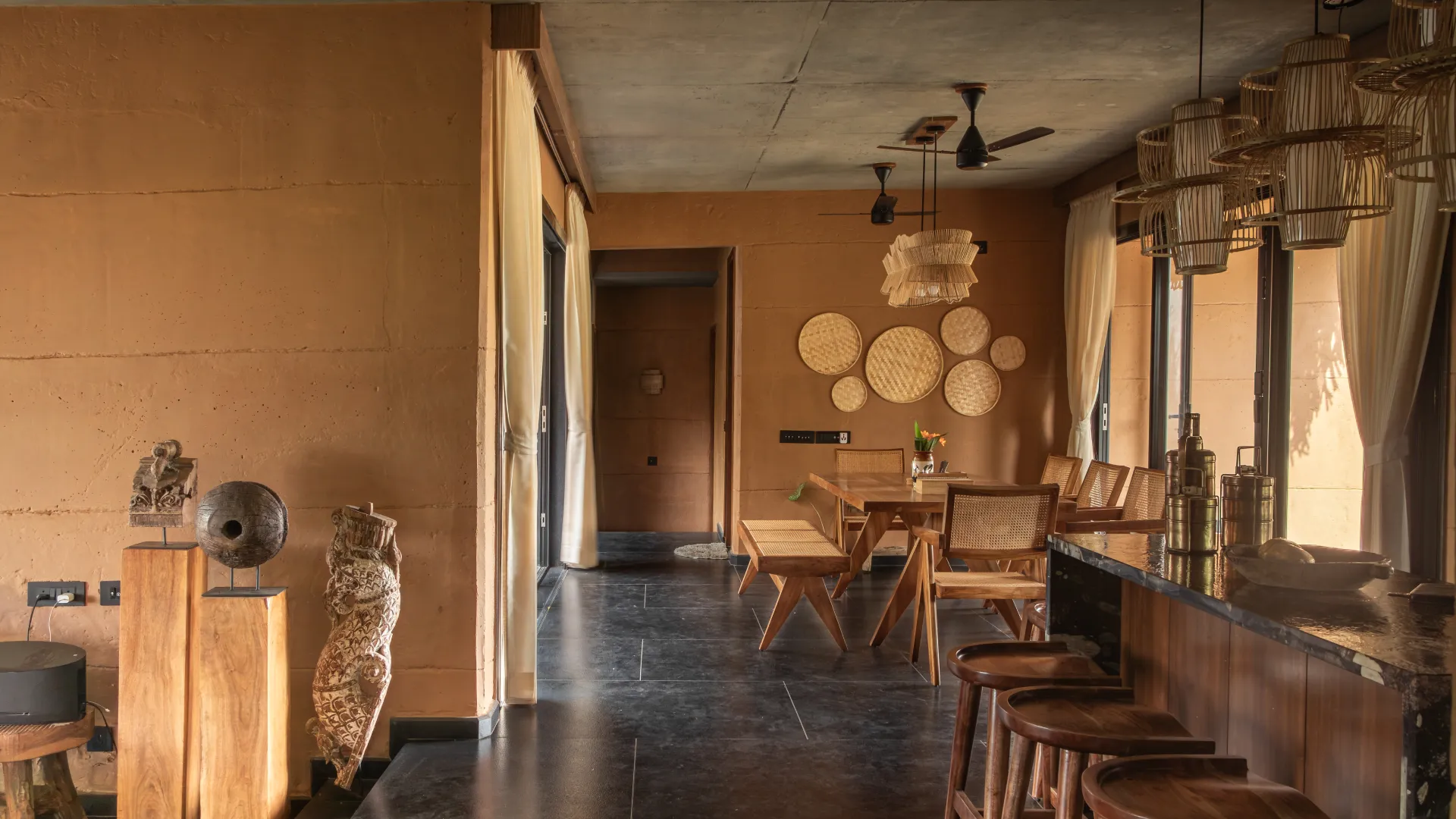
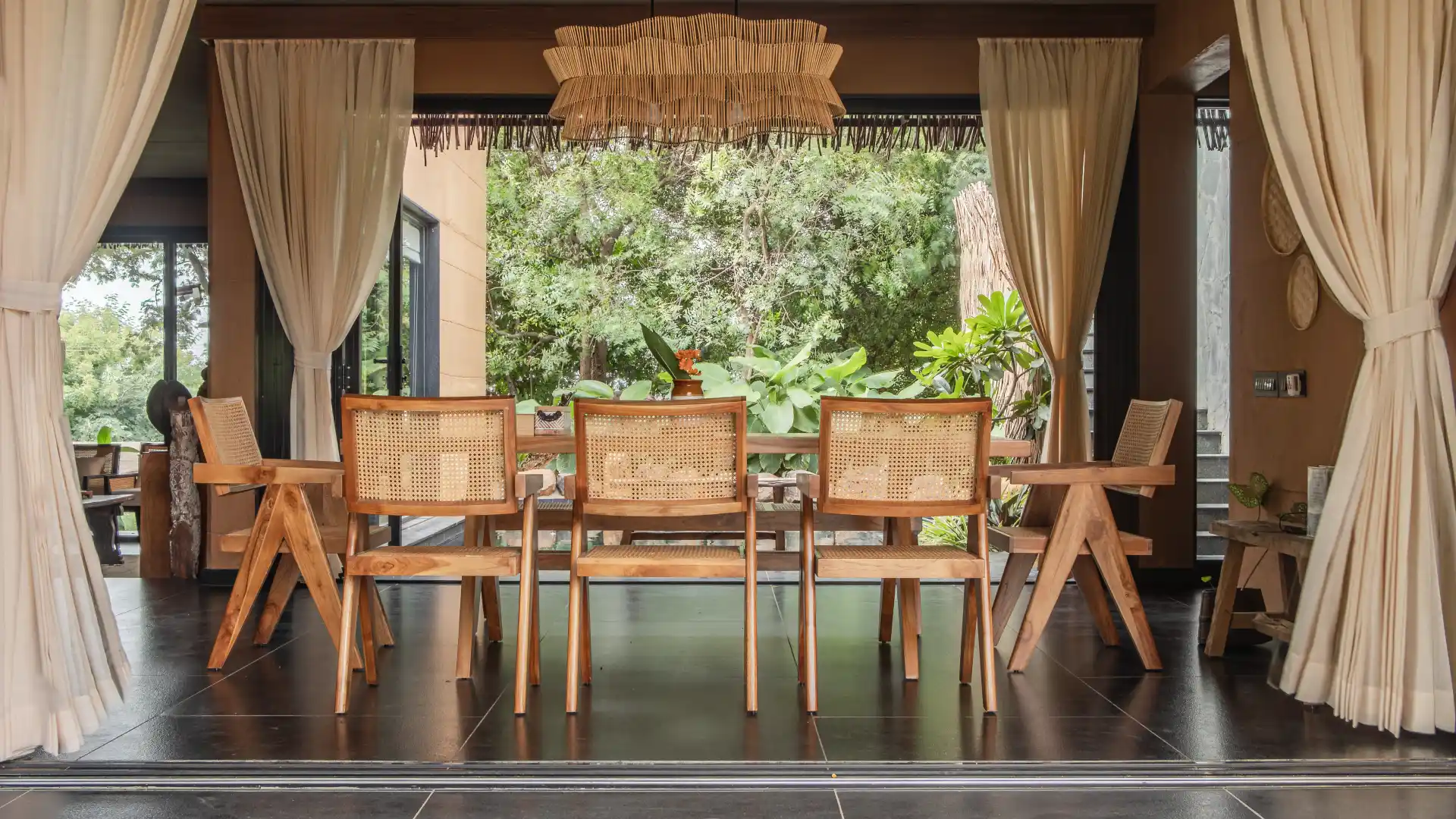
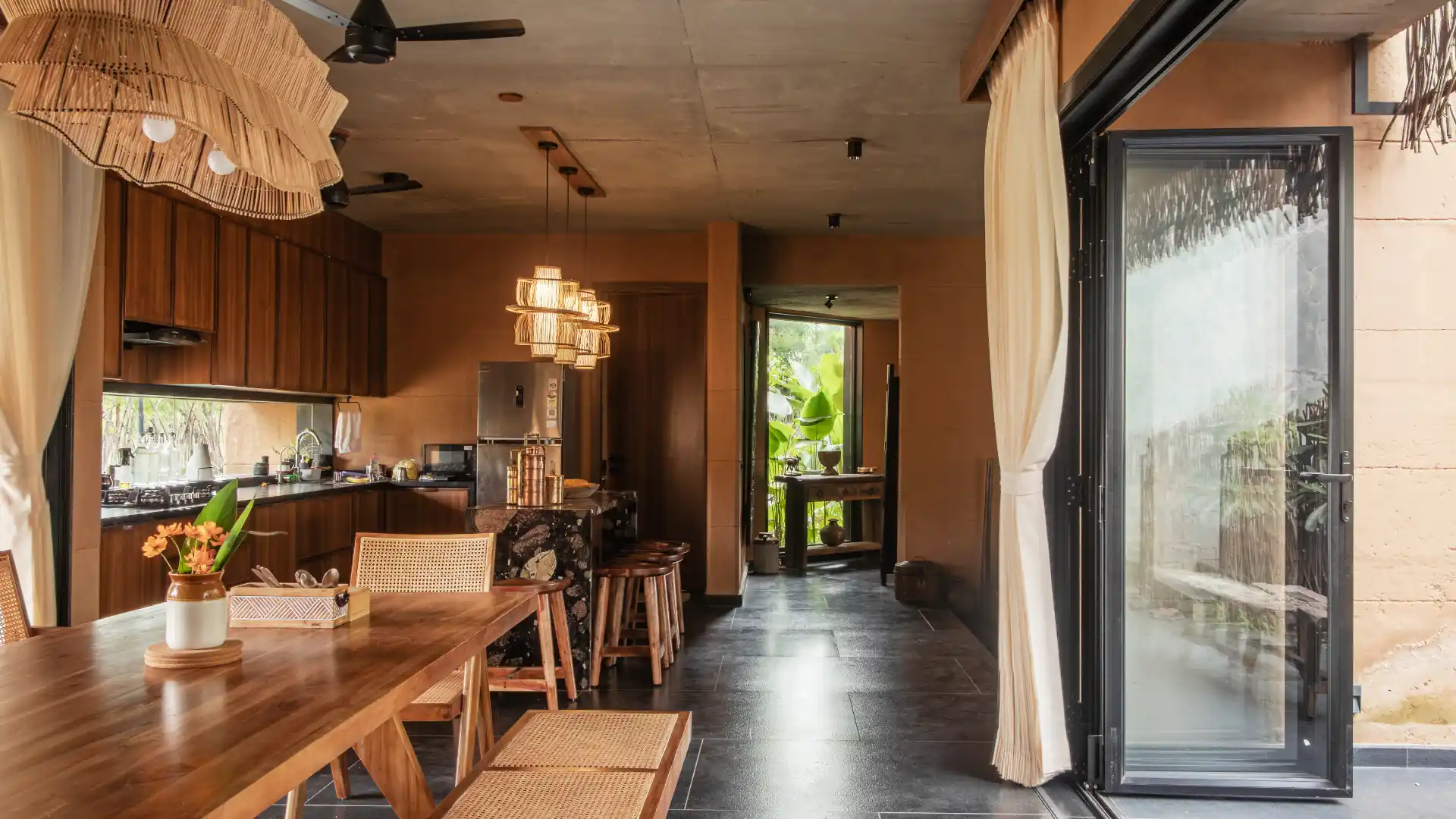
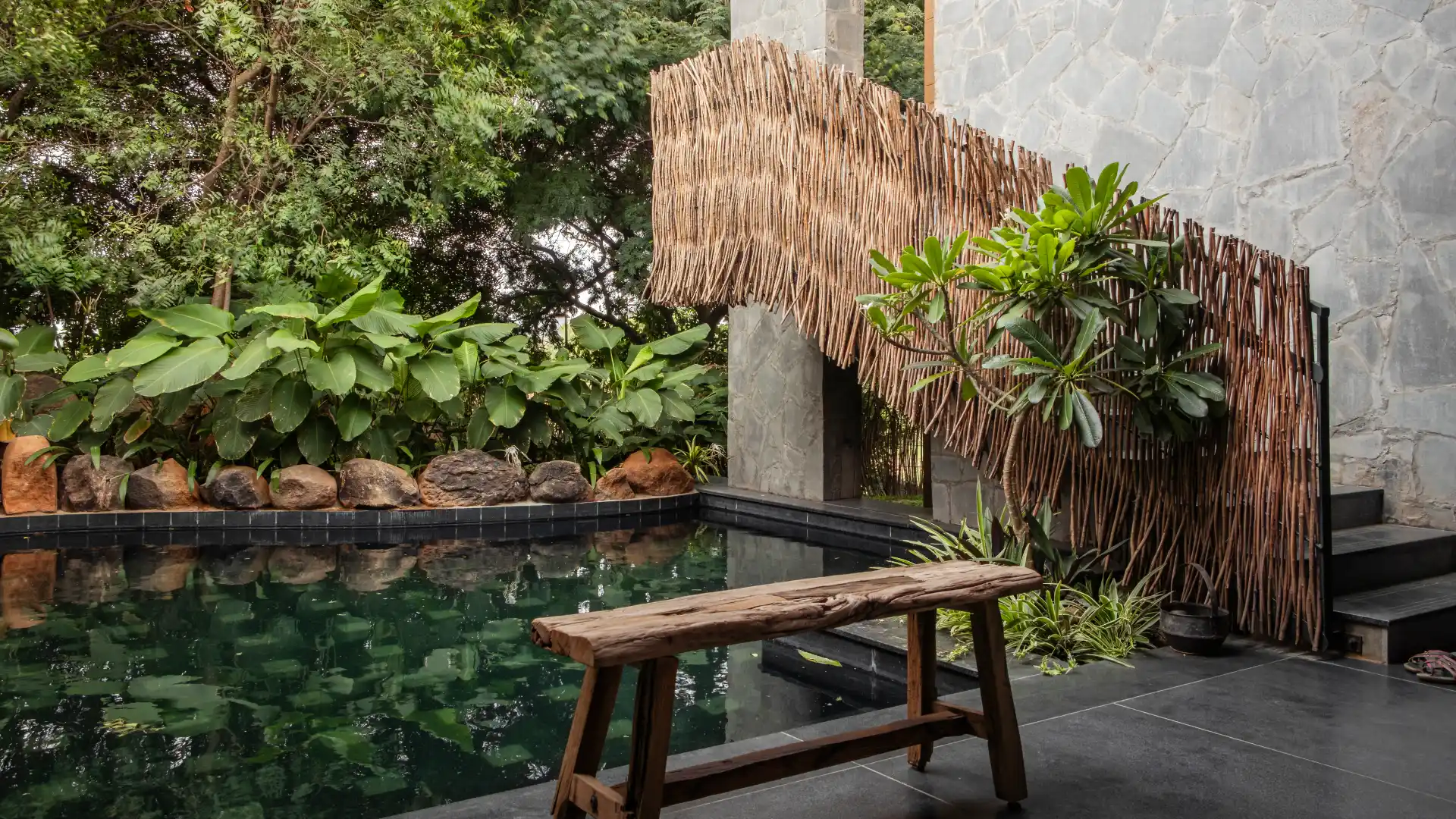
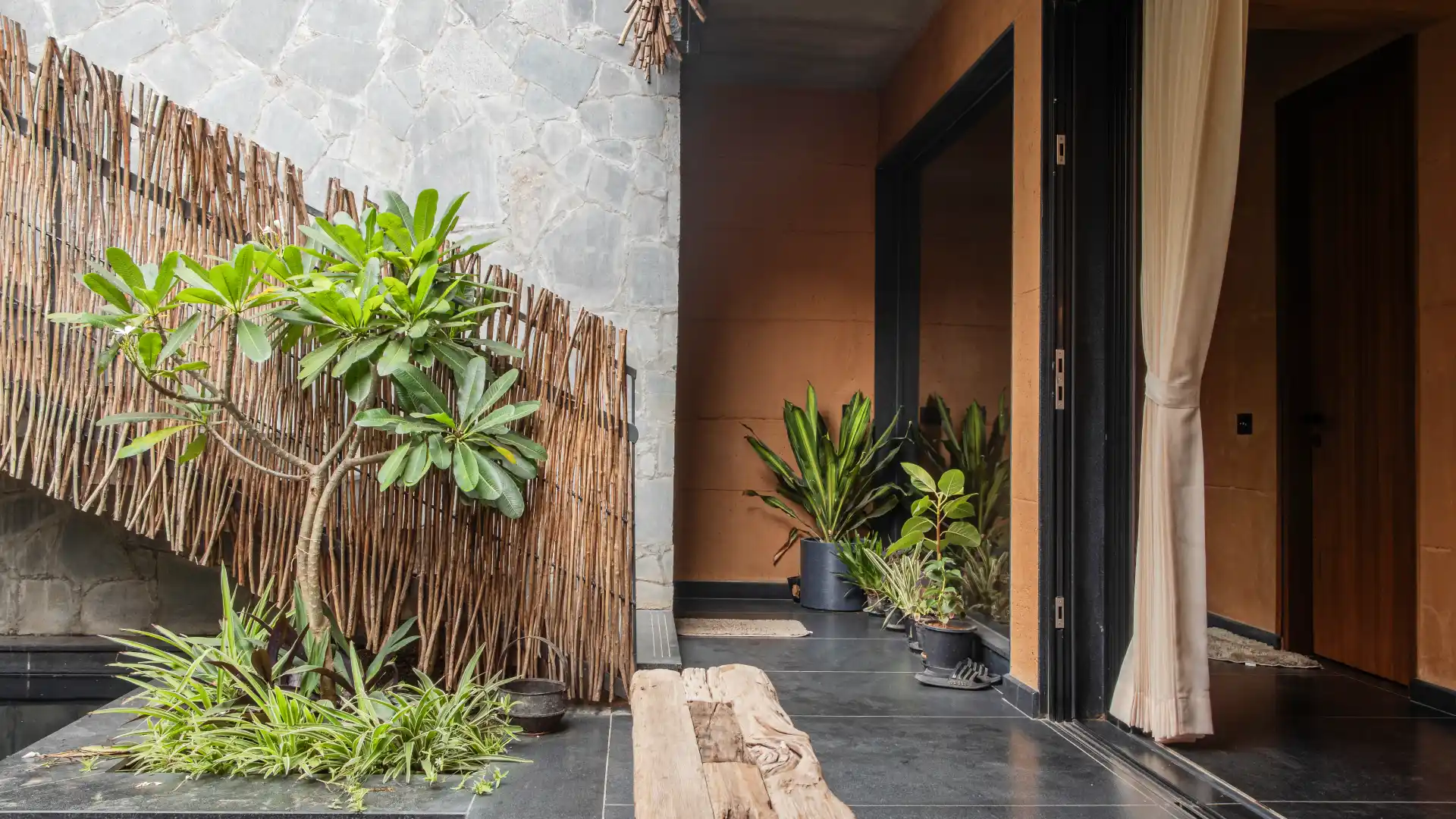
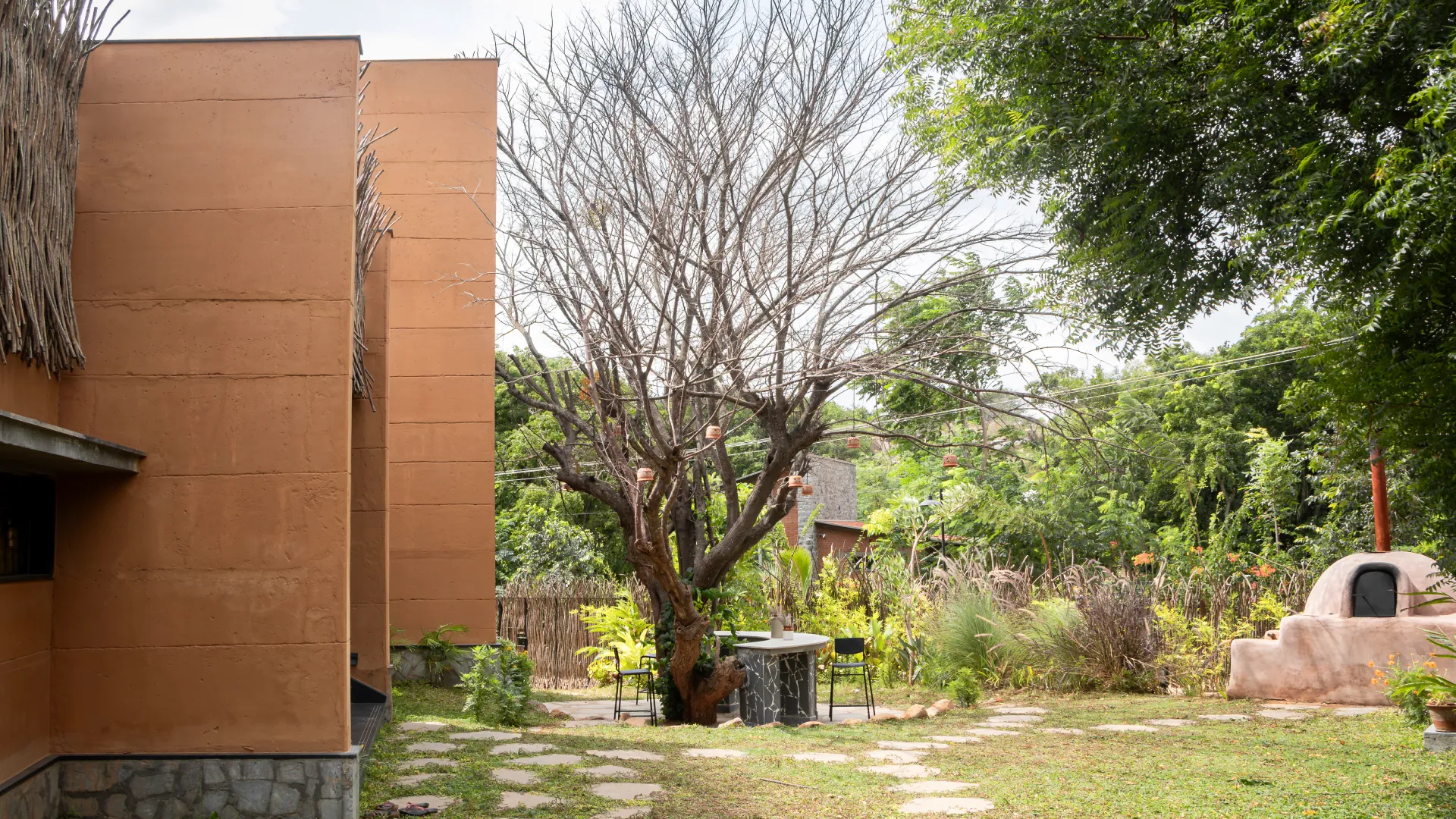
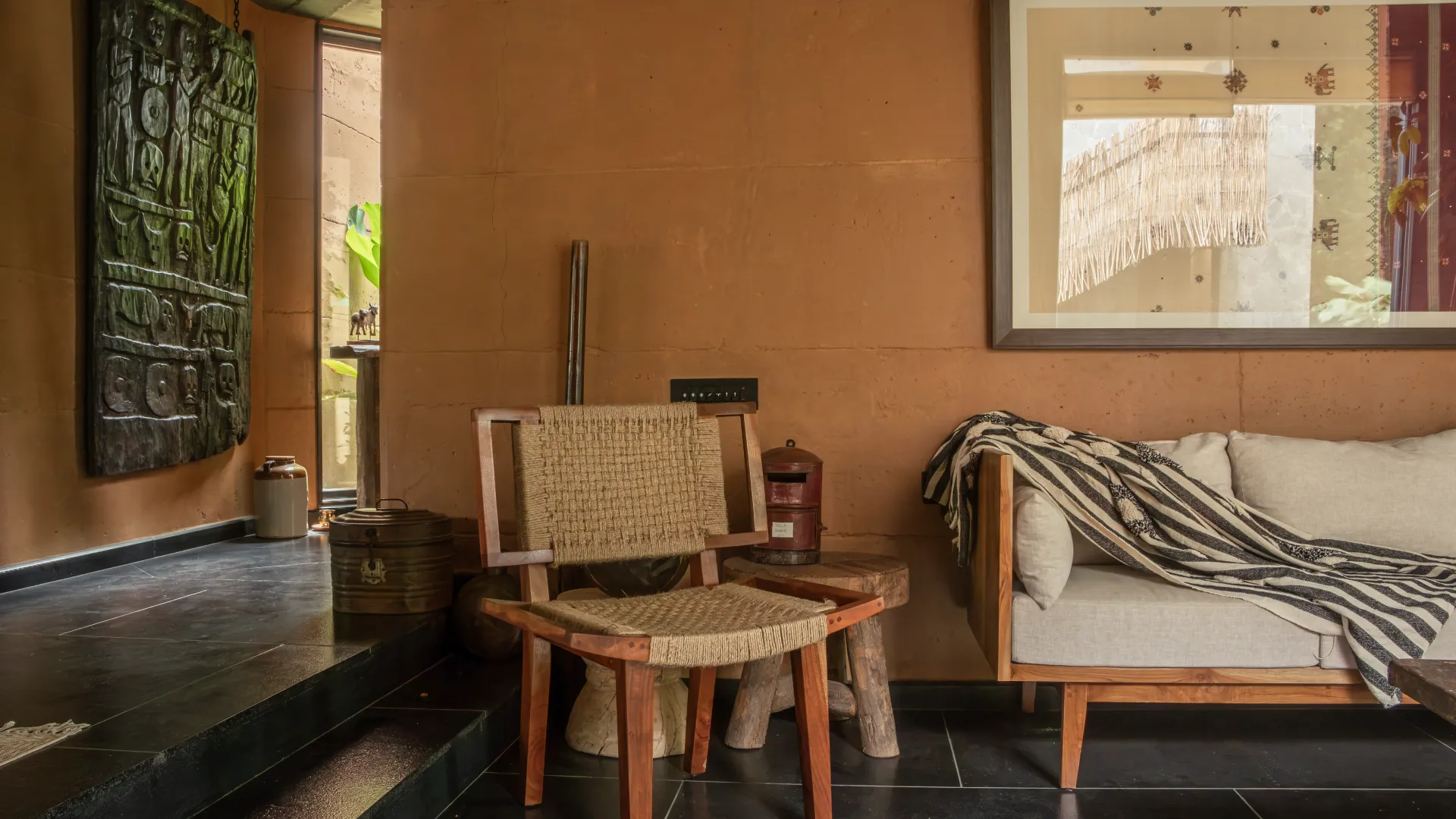
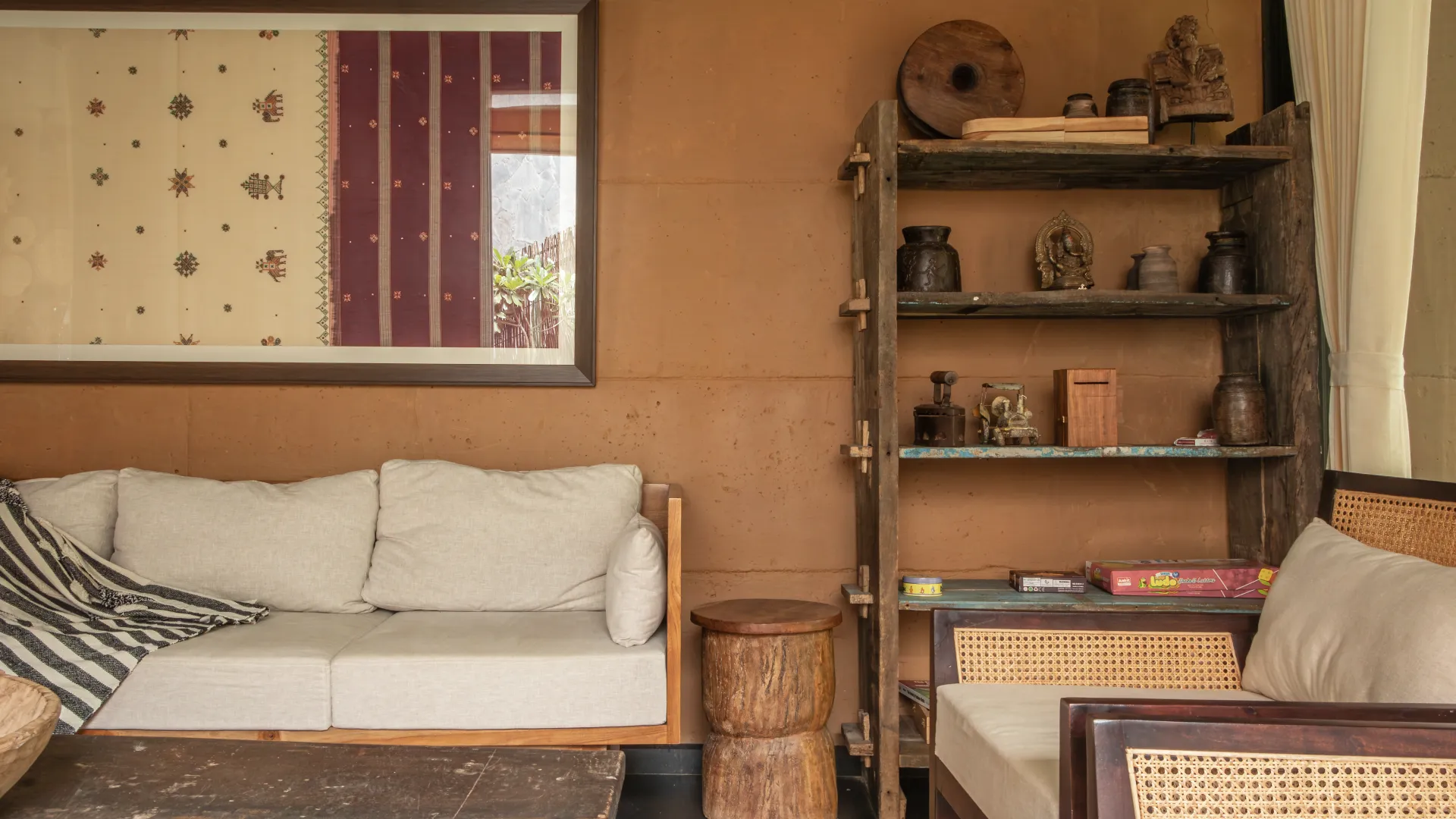
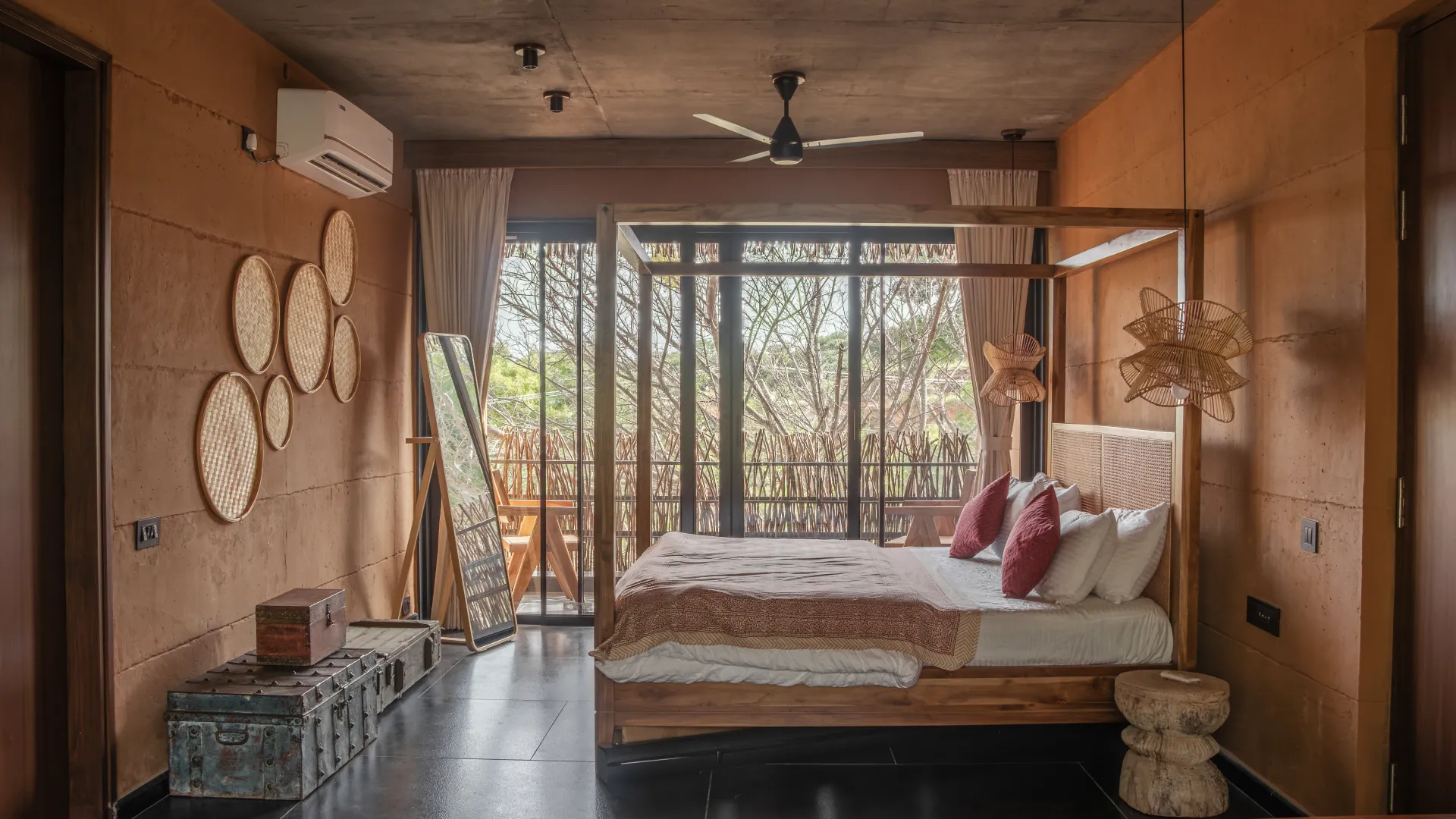
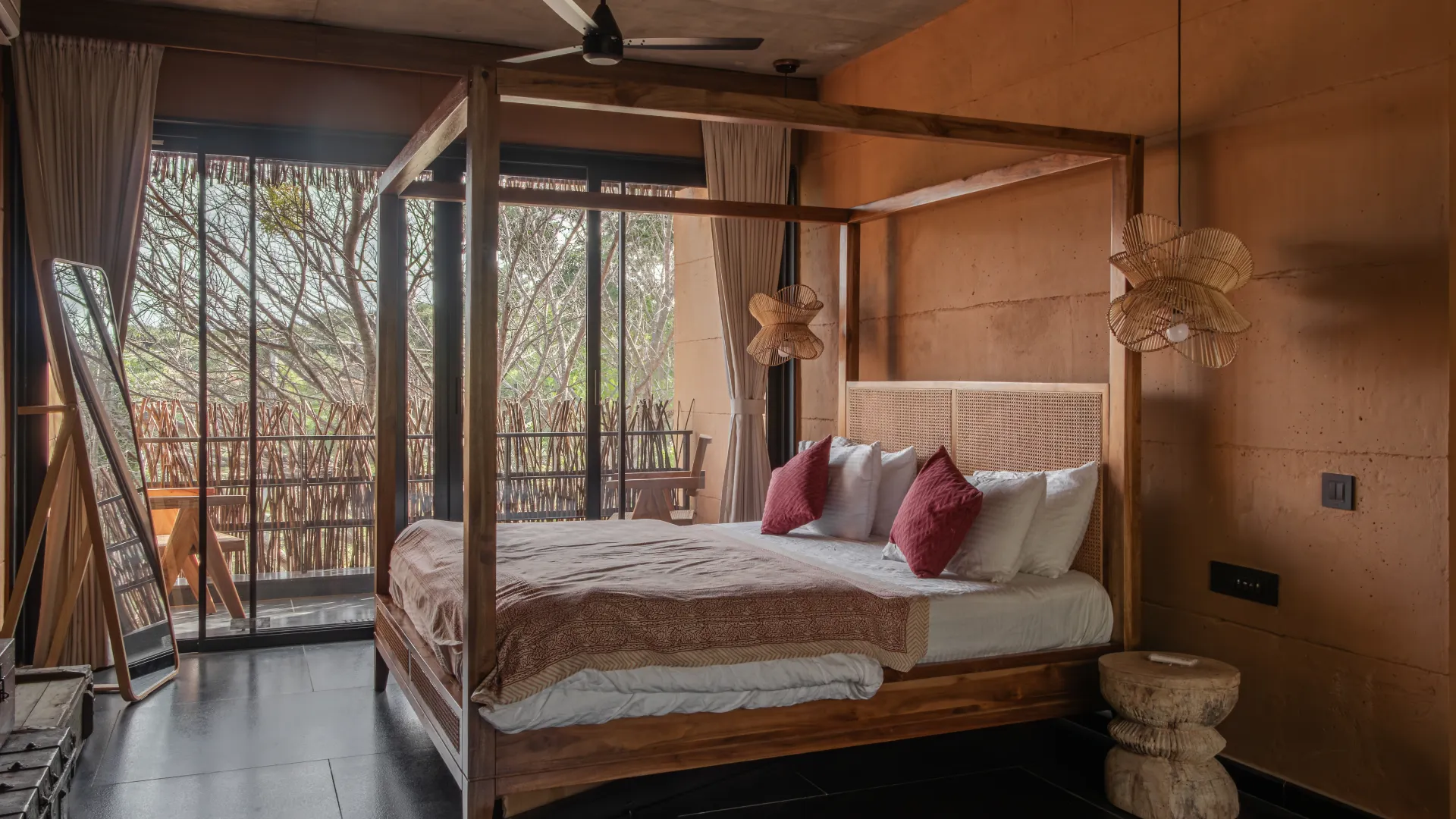
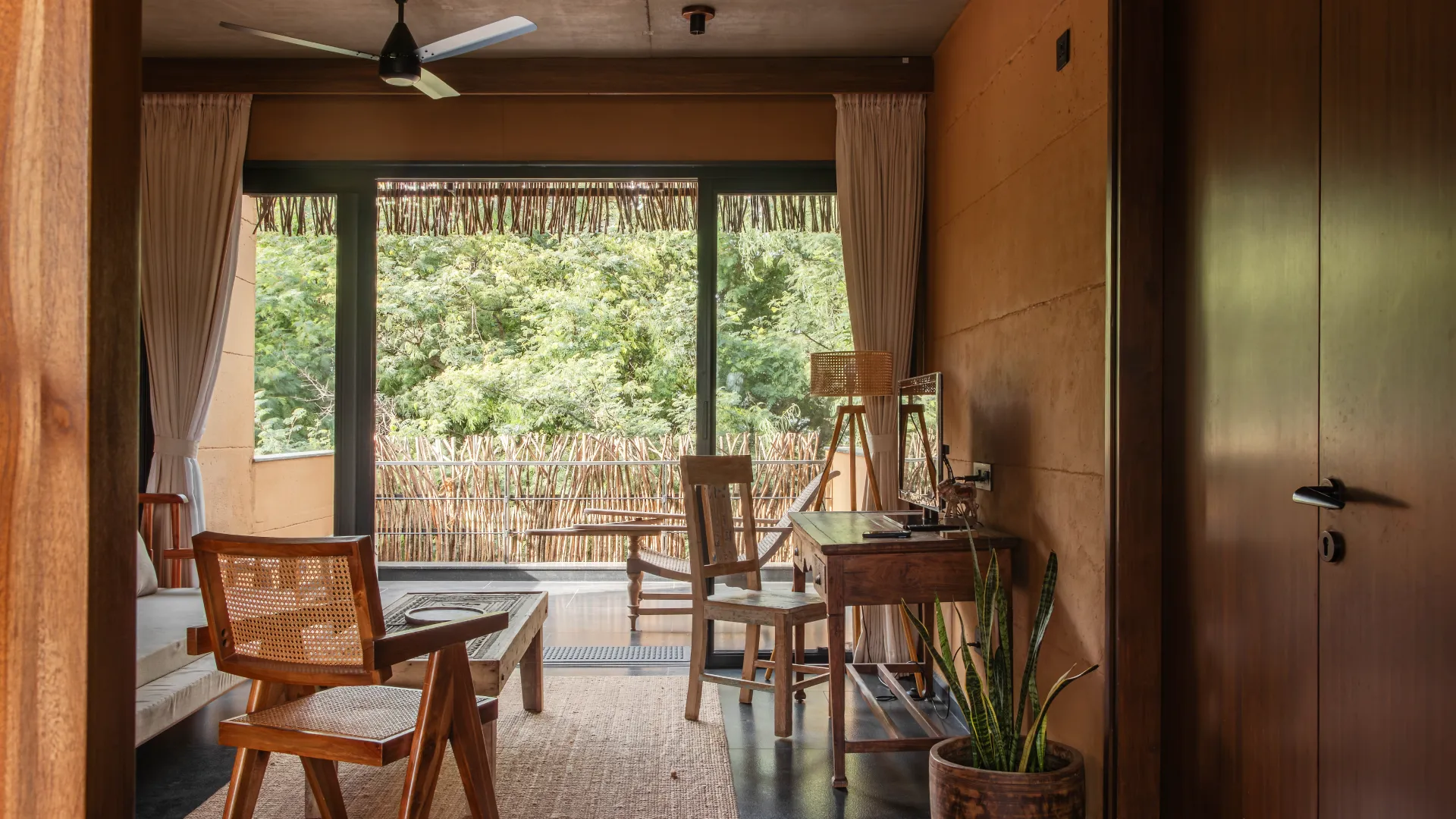
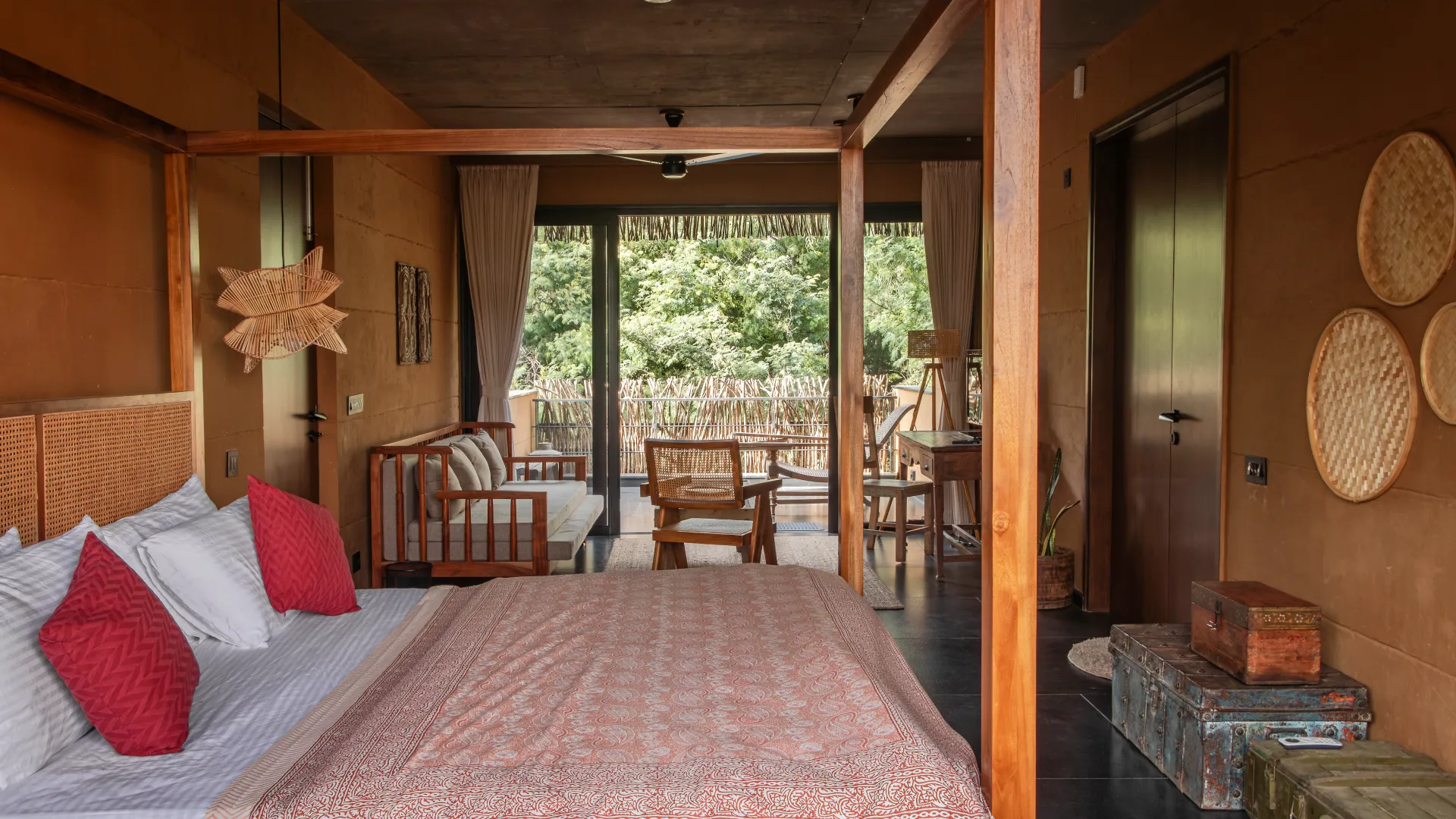
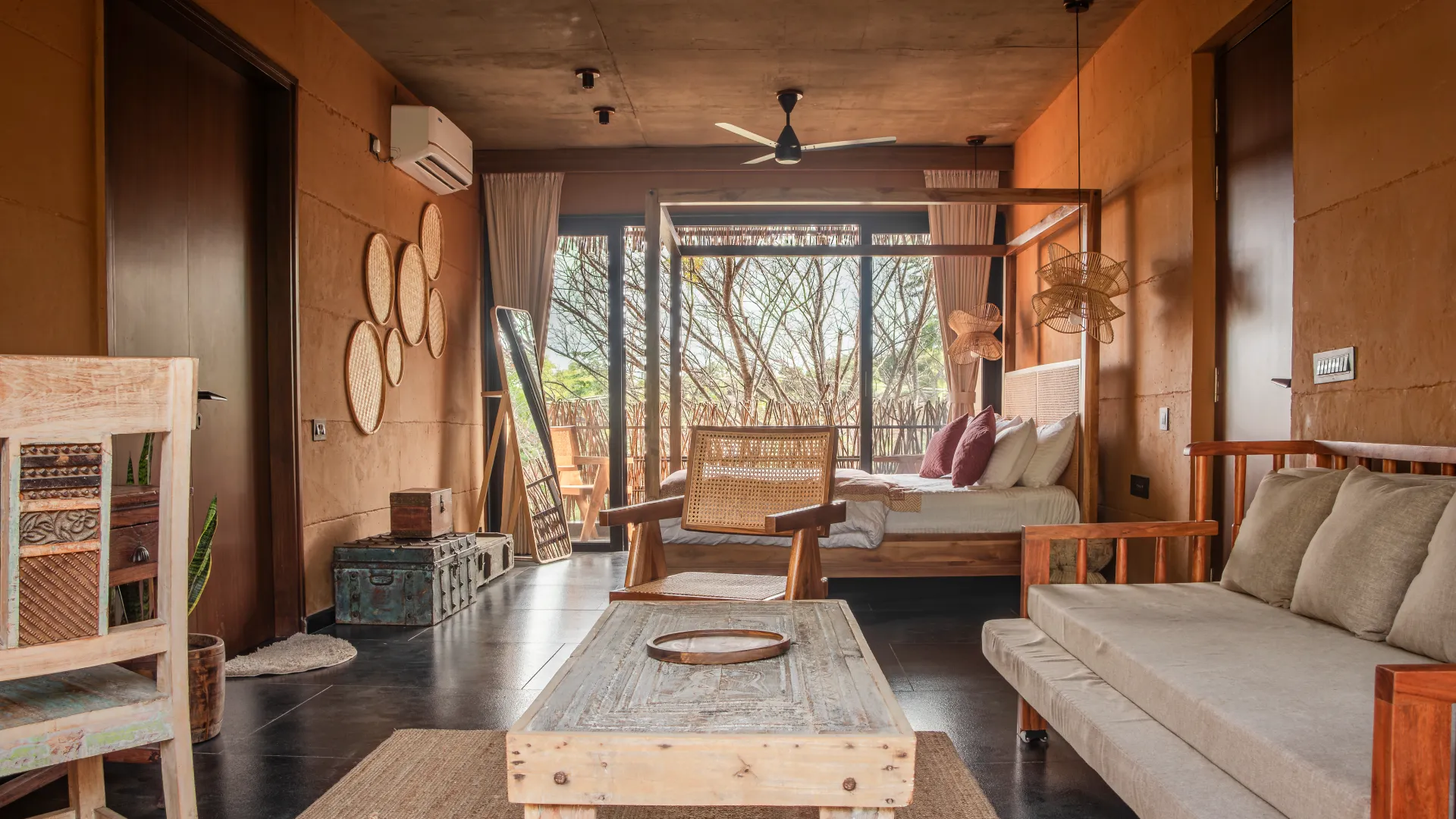
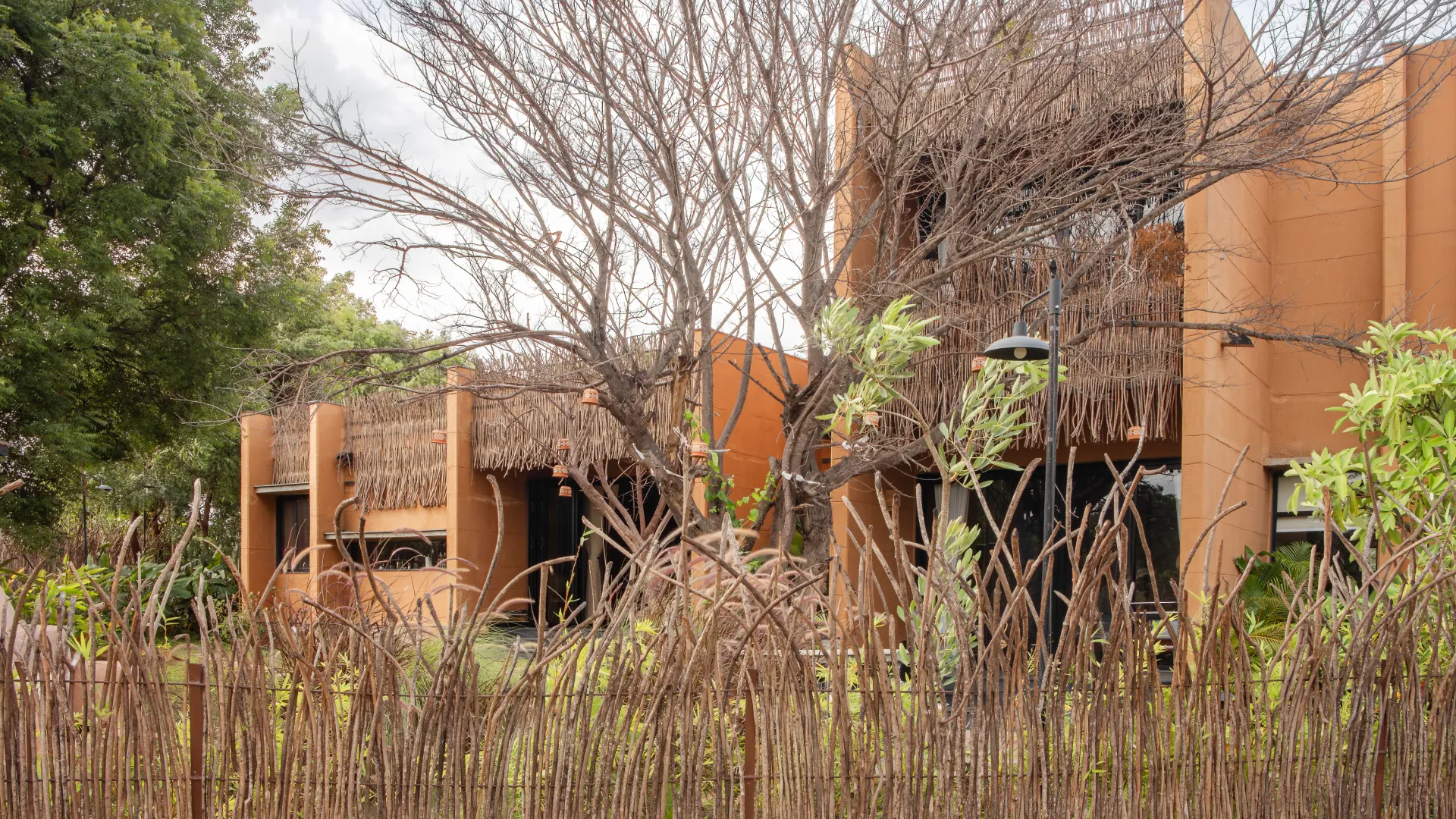
Amara was built around the idea that nothing needs to be new to be beautiful. Its walls are poured earth–mixed, formed, and left with the texture of their making. Its feature wall is composed of construction debris: tiles, brick ends, and stone offcuts assembled into a surface that is more interesting than anything purpose-designed could be.
The lantana railing is perhaps the most deliberate choice of all. Lantana camara is an invasive species across South India, a plant that most farmers pull out. Here, it has been harvested, dried, and woven into a railing that is both beautiful and ecologically responsible. Amara doesn’t just use reclaimed materials. It reclaims the idea of waste itself.
Low impact, built with what exists. Reduced reliance on new materials, minimising extraction and transport.
Minimal, no paint, no synthetic layer. Poured earth and raw finishes keep the space breathable.
Responsive, lantana transformed from invasive growth into functional craft.
Lived-in, materials arrive with memory, the space feels evolved not newly made.
Karnataka
Brutally minimal and striking.
To savour a moment.
Karnataka
Made with Mud and Care
A breath of life, a pause, a rest, a feeling of slowing down.
Karnataka
Made with Mud and Care
A home crafted like heaven on Earth
Karnataka
Brutally minimal and striking.
A retreat home away framing the earth along the blue sky,
Karnataka
Made with Mud and Care
A childhood memory crafted into a contemporary home.
Karnataka
Made with Mud and Care
Flowing away, like a butterfly.
Karnataka
Brutally minimal and striking.
Built from what was left behind.
Tell us a little about your project, and let’s explore how we can build with you.